
Workforce & Innovation Ecosystem Capacity Strengthening
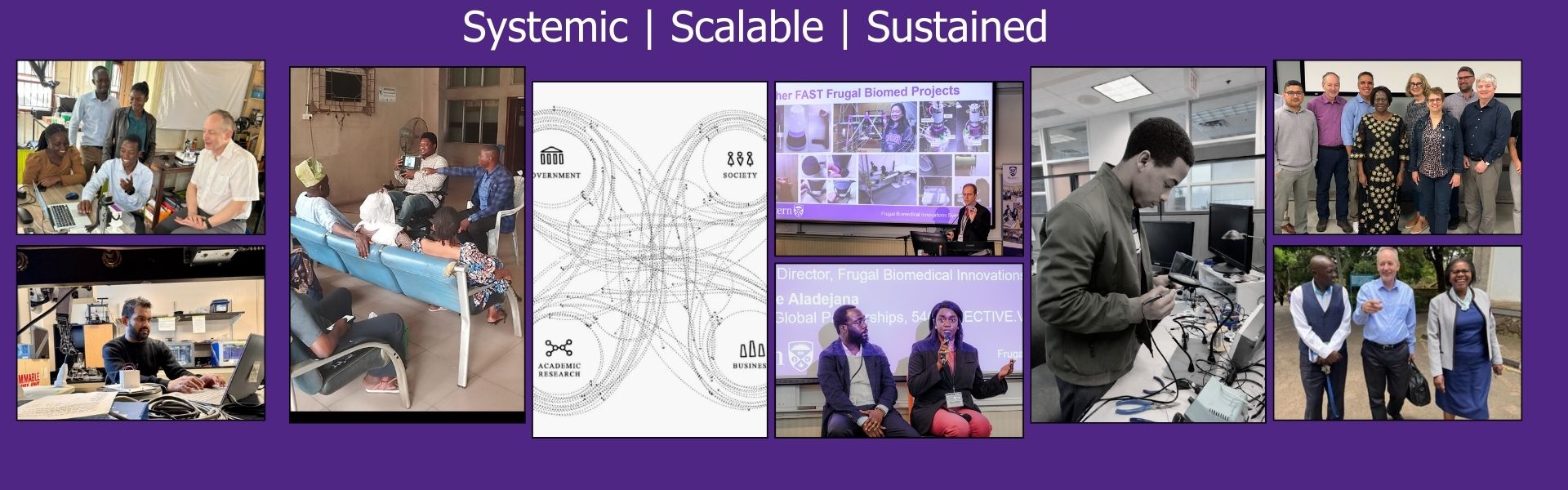
We recognize that technologies alone do not transform health systems - people, partnerships, and local capacity do. This pillar focuses on strengthening sustainable biomedical innovation ecosystems by training the next generation of engineers, clinicians, and researchers to design, manufacture, evaluate, and scale locally relevant health technologies.
We are building infrastructure for innovation: graduate training pathways, hands-on prototyping environments, distributed manufacturing models, and cross-sector partnerships that move ideas from concept to clinical adoption. By embedding frugal engineering principles into education and practice, we ensure that solutions are not only affordable, but maintainable, adaptable, and owned by the communities they serve.
1. Building Undergraduate & Graduate Biomedical Engineering Training Pathways
We support Undergraduate, Masters and PhD trainees through hands-on, challenge-driven research embedded within real-world health systems. Students work directly with faculty, researchers and clinical and community partners to co-develop devices. They gain experience in regulatory navigation, validation, and implementation science.
2. Creating Regional Innovation Ecosystems
Through partnerships with institutions such as Bahir Dar University, Makarere University and the University of Nairobi, we support the growth of regional hubs that integrate research labs, makerspaces, clinical collaborators, and local manufacturers.
These ecosystems enable rapid prototyping, local fabrication, field testing, and iterative redesign, ensuring technologies are shaped by context from the start. The goal is not one-way technology transfer, but durable innovation capacity rooted in local expertise.
3. Embedding Entrepreneurship & Commercialization
We integrate entrepreneurship training and commercialization strategy into our Engineering Health Equity Fellowship training program to ensure promising technologies move beyond prototypes.
By aligning innovation with local market realities and health system needs, we create viable pathways for trainees and partners to advance their research beyond the lab.
4. Running Communities of Practice
A communty of practice (CoP) is comprised of a group of individuals who meet on a regular basis to discuss a shared concern or problem. This community is supportive, collaborative, and focus' on the sharing of knowledge. We run 5 CoP's annually: Frugal Innovation Principles for Medical Devices, Appropriate and Effective Implementation of Open-Source Software, Enablers and Barriers to Diffusion of Frugal Biomedical Innovations, Contemporary Issues in Remote and Global Health and EDIAD in Frugal Biomedical Innovation.
CoPs are open to trainees funded through the Engineering Health Equity Fellowship.
5. Linking Universities, Health Systems & Industry
We intentionally bridge academic research, frontline health systems, and manufacturing partners to ensure technologies are clinically relevant and practically deployable. By aligning incentives across sectors, we shorten the path from innovation to adoption and strengthen feedback loops between users and designers.
This integrated model increases the likelihood that devices developed within our program will be trusted, procured, and sustained within health systems.
Learn more by viewing our 2025 Frugal Biomedical Innovation Symposium, 2025 Summer Retreat and visiting our Guest Talks page.
We take a cross-cutting approach to our work.
Across all pillars, our work is guided by a cross-cutting approach that prioritizes partnership, equity and real-world impact. Innovations are co-designed with communities and health systems, and in many cases projects originate directly from the clinicians, researchers or practitioners who will ultimately use and maintain the technology. Implementation research is locally led, with partners driving validation, adoption and deployment within their own contexts. We also prioritize gender-inclusive and youth-focused participation in training and leadership, helping ensure the next generation of innovators reflects the communities they serve. Our Africa–Canada partnerships are built on reciprocal, long-term collaboration and shared learning. From the earliest stages of development, projects also consider the full pathway from innovation to adoption and scale, including sustainability, local manufacturing, regulatory pathways and integration into real-world health systems.